























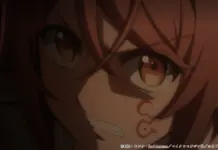




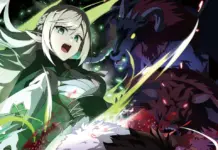
Kyofu Collector(恐怖コレクター) isn’t just “baby’s first horror” – it’s a kids’ urban legend series that actually wants to give you chills. With over one million copies in print worldwide, a 2026 fall TV anime on NHK General, and Volume 27 dropping today in Japan, this Tsubasa Bunko title blends school-age scares, creepy folklore and a mysterious boy in a red hood who “collects” curses.
Urban legends come alive in Kyofu Collector
Set in ordinary Japanese towns where rumors spread faster than homeroom gossip, Kyofu Collector (恐怖コレクター) builds its horror out of urban legends kids might actually hear at school—faceless children, cursed emails, hidden rooms and more. Each case starts as a playground story or internet creepypasta, and then quietly crosses the line into “oh no, this is happening for real.” It’s written for upper elementary readers, but the way it treats those rumors as something genuinely dangerous is what makes even adults feel a little uneasy.
Kids horror backed by real J-horror pedigree
The novels are written by Midori Sato and Norio Tsuruta, directed and supervised by the filmmaker often called the “father of J-horror” for works like Ring 0: Birthday and Orochi, with illustrations by Yon. That mix of children’s fiction and hardcore horror experience is why Kyofu Collector is more than a simple spooky-story collection. Scenes linger on eerie details, slow dread and that “did I really see something?” feeling—scary enough to thrill kids, but crafted with the timing and atmosphere horror fans will recognize.

Fushigi, the red notebook and creeping dread
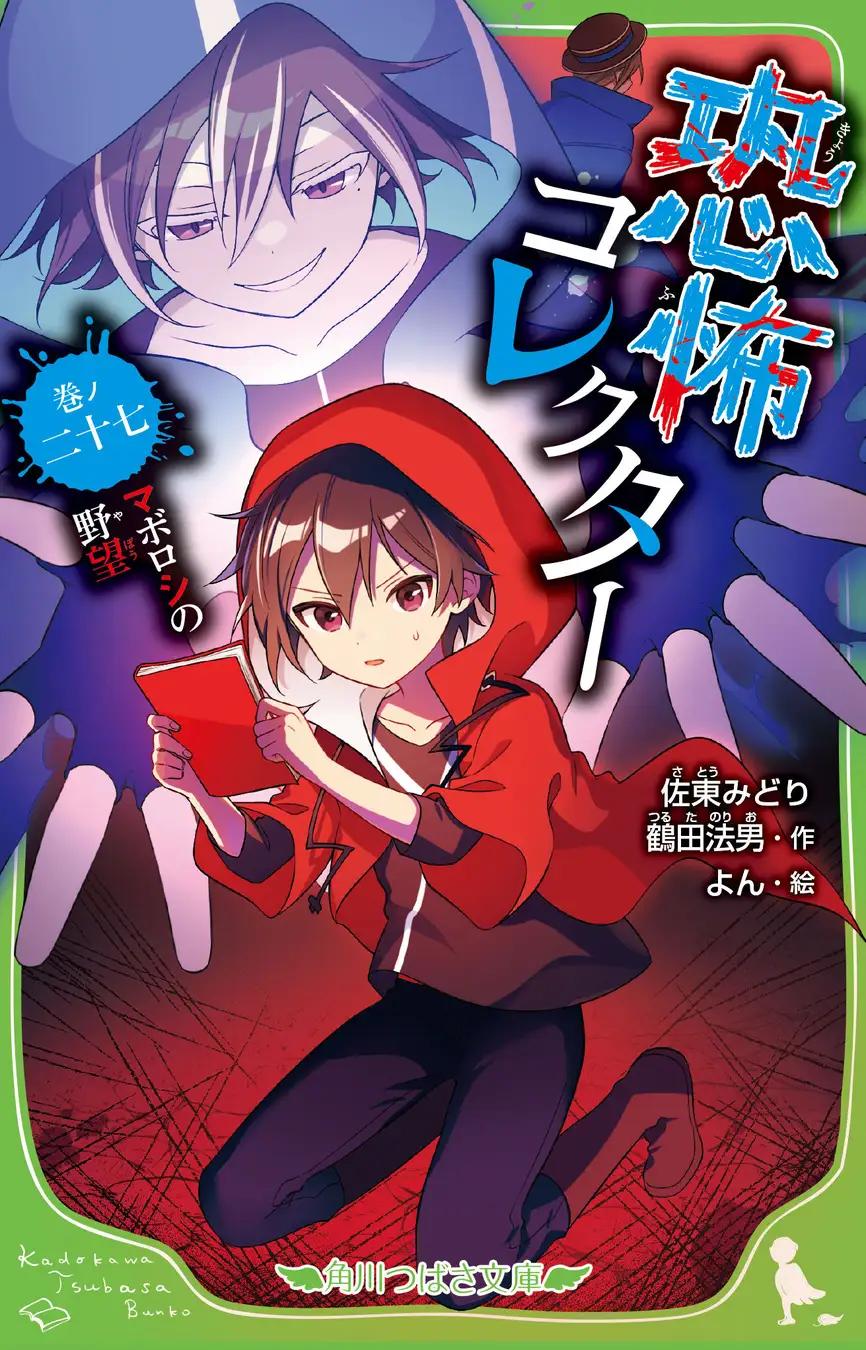
At the center of it all is Fushigi Senno, a boy in a red hooded coat who wanders from town to town, tracking down manifested urban legends and trying to “collect” their curse marks in his red notebook. His twin sister Himitsu can make those legends real, and a growing cast of kids and adults get caught between them. The stories often start small—strange footsteps, a rumor about a weird photo—before Fushigi appears, confirming that this isn’t just talk. The tension comes from wondering whether he’s a savior, or just another part of the nightmare.
Volume 27 and its nightmare school backpack
The newest book, Kyofu Collector Volume 27: Maboroshi no Yabou(恐怖コレクター 巻ノ二十七 マボロシの野望), goes all-in on schoolday anxiety with a “man-eating backpack.” A possessed randoseru lunges at people while a forest of sharp teeth grows inside it, and Fushigi can’t find any curse mark to seal with his notebook—his usual trick simply doesn’t work. Meanwhile, his ally Jimmy fights to save victims, and Aiko is targeted by a blue-cloaked monster at a haunted lake whose reaction to her blue hair hints at a deeper mystery.
TV anime adaptation on NHK in fall 2026
With the novels’ 10th anniversary and over one million copies sold across Japan and overseas editions, Kyofu Collector is now heading to TV as a full anime series on NHK General in fall 2026. NHK describes the show as following Fushigi’s travels as he tracks down urban legends brought to life, clashing with Himitsu and other cursed figures. International coverage already uses the English title Horror Collector, and Yen Press has licensed both the novels and manga adaptation for English release—good news if you’d rather read in English before the anime airs.
Best entry points and links to start reading
If you’re horror-curious and wondering where to start, Volume 1 is the cleanest entry—and right now Japan has a limited-time “Volume 1 free to read” campaign on KADOKAWA’s Yomeruba portal, running in six parts until January 12, 2026. For Japanese readers who want to dig deeper, KADOKAWA’s Tsubasa Bunko site has a full series guide and character bios on its Tsubasa Bunko series guide, plus a 10th anniversary special site that collects anime news and special projects in one place. And if you just want to dip a toe into the curse, you can jump straight into the free-reading campaign via the Yomeruba Volume 1 special before the TV anime hits.
(C)佐東みどり・鶴田法男/KADOKAWA/NHK・NEP
✨✨✨More Anime You’ll Love:
 GC Novels Oct 30 Release: Golem Frontier Vol.1 Pre-Orders Open
 Where to Preorder Reincarnated as a Sword Vol.20—Price, Date, and Bonus Editions
 Comic Valkyrie Vol.148 Guide: New Series Launch and Free Highlights
 Reincarnated Elf Legend “Majutsu wo Kiwamete” Gets Anime Adaptation and Grast COMICS Fair