
















In GATE, the Battle of Italica looks like a simple mismatch: rifles versus shields, discipline versus chaos. But that reading misses the real tension. Italica is not an allied city yet. It’s a politically ambiguous space packed with civilians, fear, and rumor—exactly the kind of environment where modern militaries can lose legitimacy faster than they can win a firefight. The manga leans harder into the siege’s cruelty, and that “extra ugliness” matters. It forces a question the anime can glide past: what is the right move when saving people risks turning you into an occupying force?
Italica isn’t a battlefield yet—it’s a legitimacy trap
The official framing is clear: Italica is burning, Princess Piña is organizing a defense, and the attackers are deserters turned bandits—survivors of a crushing defeat who now feed on a power vacuum. Itami’s 3rd Recon arrives with Tuka, Lelei, and Rory, and Piña makes the key call: she invites them inside the walls to decide whether they’re enemy or ally.
If you want the cleanest refresher on the setup, the official synopsis for Episode 5 is the best starting point: Official Episode 5 synopsis.
A “siege” is usually taught as geometry: walls, gates, fields of fire. Italica adds the modern problem: legitimacy. Piña doesn’t just need to survive the night. She needs to survive it as a ruler. And Itami’s unit doesn’t just need to repel attackers. They need to do it without breaking the political reality they came to study.
The manga’s harsher tone changes the tactical question
Many readers feel the manga pushes the cruelty of the siege closer to the center of the frame. That difference matters because the uglier the night becomes, the less it behaves like a clean combat scenario and the more it becomes a collapse scenario.
Collapse scenarios aren’t solved by marksmanship alone. They are solved by restoring control: credible authority, predictable rules, and safe patterns for civilians to follow. The moral weight rises with every moment of chaos, and the story’s “right answer” stops being about victory and starts being about what kind of order you leave behind.
Piña’s defense is medieval—and that’s why it works (until it doesn’t)
Piña’s side is tactically underrated. She leans on what her world knows: chokepoints, narrow streets, local militia networks, and the simple moral framing of defending home. For a pre-modern city, that’s rational.
Her problem is the enemy. These aren’t negotiators with a long-term political objective. They’re predatory violence with a short time horizon. That kind of threat is harder to deter, which is why “show of force” becomes tempting—and also dangerously easy to misread as foreign domination.
Itami’s real mission isn’t combat—it’s controlled intervention
Itami’s unit is a small reconnaissance element, not a stabilization force. Even if they can dominate the street fight, they cannot “own” the city politically. They also lack deep local intelligence, which makes enemy identification messy in a civilian-packed environment.
So the expert-level question isn’t “Could they win?” It’s “What outcome can they win without inheriting responsibility?” That’s where modern doctrine becomes useful. Western militaries often evaluate these situations through three connected tests: legitimacy, identification, and proportionality.
In anime terms, Piña inviting them inside the walls is not just hospitality. It’s an attempt to bind foreign power to her legitimacy before fear and rumor reframe it as occupation.
The Type 64 rifle is also psychological signaling
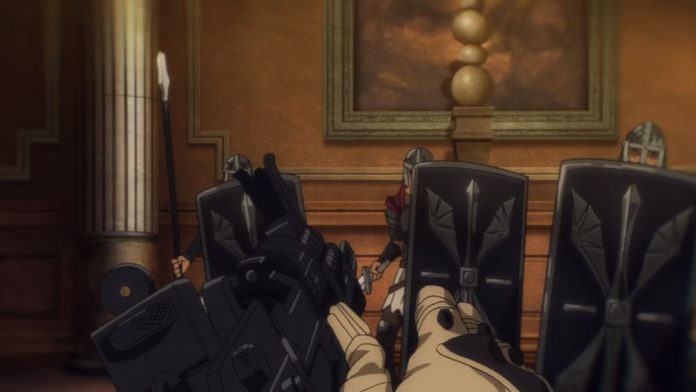
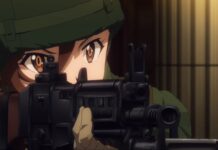
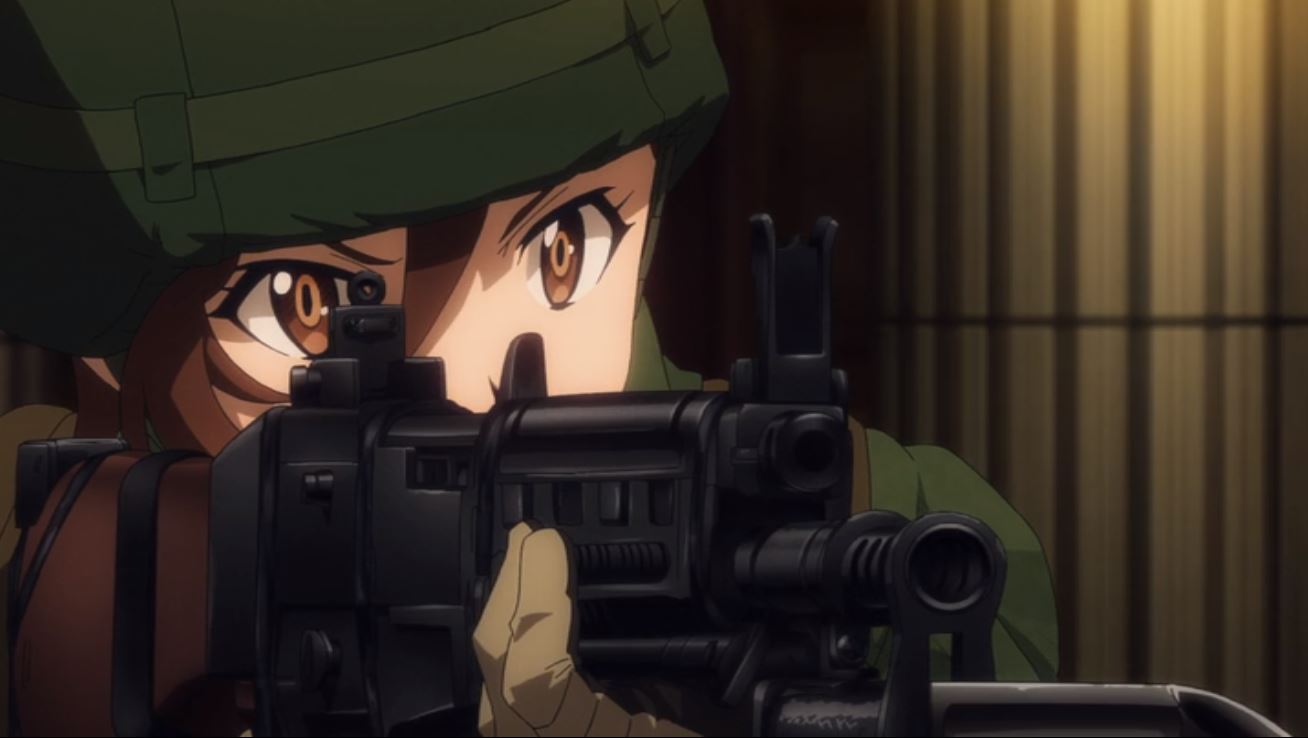
In Italica, the Type 64 matters for more than its ballistic performance. It functions as a psychological lever in a city on the edge. The report of the weapon, the visible recoil, and the immediate results create a clear message for everyone watching: the rules of violence have changed overnight.
That message cuts both ways. For civilians, it can stabilize panic by proving the defenders can stop the attackers. For the attackers, it can collapse momentum by introducing fear and uncertainty. But for Piña’s side, it also creates political risk. If the crowd starts believing the “new rule-set” belongs to foreign soldiers rather than to the city’s own authority, then every successful shot quietly transfers legitimacy away from Piña.
This is where GATE’s small-unit focus becomes more than a storytelling convenience. A limited JSDF presence keeps the intervention readable and morally tense. The show can frame their force as decisive yet bounded—supporting Piña rather than replacing her. If a large modern force entered Italica early, the problem would shift from survival to governance: checkpoints, detention, intelligence screening, and public order. That might be realistic, but it would also turn a siege drama into a long stabilization mission, changing the genre and the emotional stakes.
So the Type 64 is not just “a powerful rifle in a fantasy world.” In Italica, it’s a narrative amplifier: it reassures, intimidates, and threatens to rewrite who the city believes is truly in control—all at the same time.
That’s why GATE keeps the core hero unit small. It preserves drama. If a large modern force arrived early, Italica would turn into policing and administration, not a siege story with moral pressure.
What “correct” looks like when civilians are the center
In Italica, “correct” depends on the political end state, not the kill count. If the goal is saving lives while preserving Piña’s authority and avoiding de facto occupation, the logic points to three constraints.
First, Piña must remain the visible face of defense, even if foreign fighters do decisive work. Second, clarity must arrive faster than fear, because confusion kills civilians. Third, force must stay proportional to the end state, because escalation creates narratives you may not be able to undo.
Where the anime helps—and where it simplifies
The anime compresses chaos into readable scenes. That’s not a flaw. It’s how the moral test stays digestible. The show keeps the audience oriented so you can feel the real drama: Piña’s gamble, Itami’s restraint, and the question of whether modern power can stay morally clean when the world around it isn’t.
The manga can afford to linger longer on panic and cruelty, which makes the siege feel less like a set piece and more like a wound. Both versions push the same thesis: violence is easy; control is hard.
GATE Season 2: everything confirmed so far
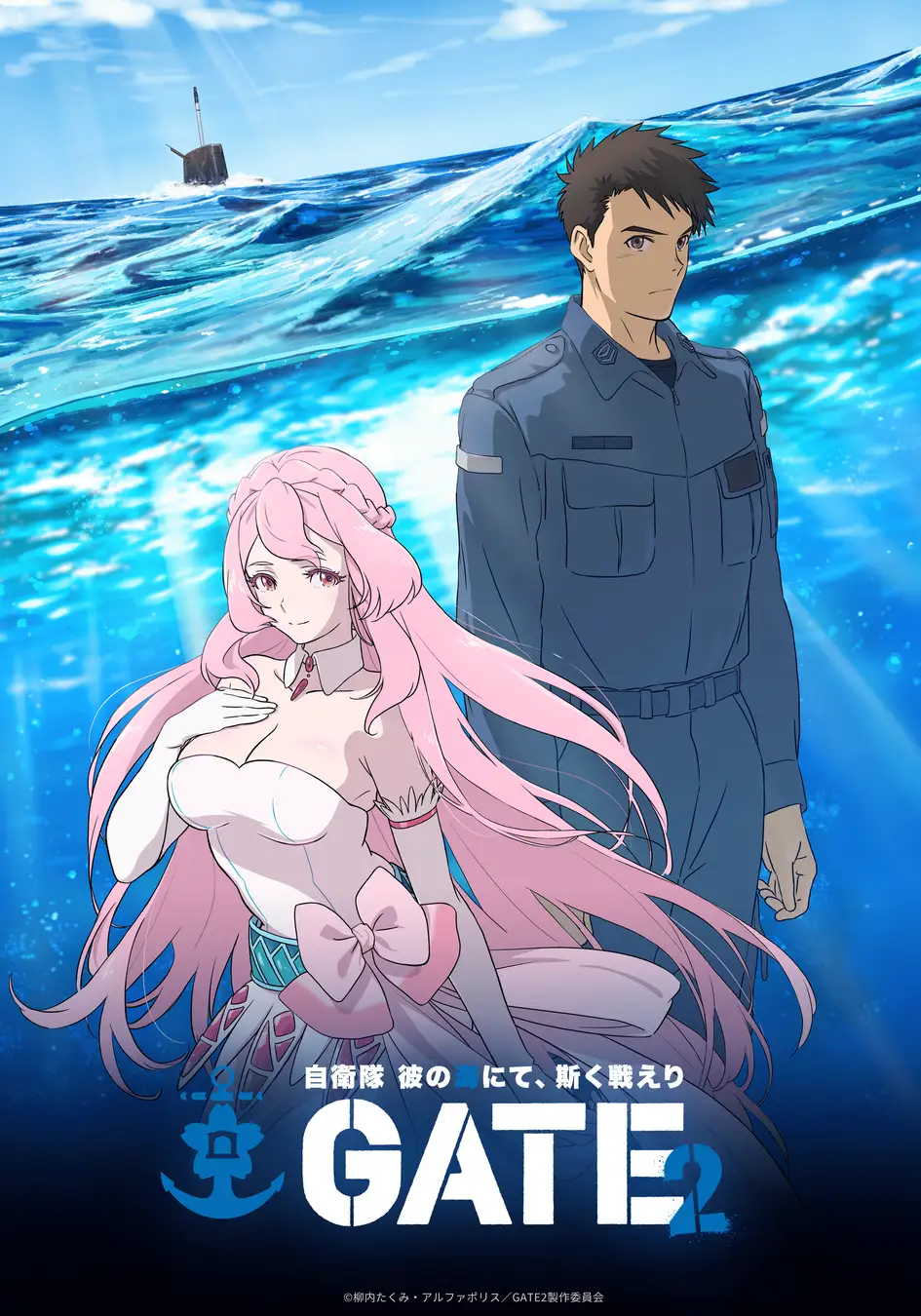
A new TV anime has been announced: “GATE SEASON2: Jieitai Kano Umi nite, Kaku Tatakaeri.” Official materials position this as a maritime-focused chapter, featuring JMSDF personnel, an Oyashio-class submarine (“Kitashio” in the story text), and a volatile sea region shaped by island-state politics and piracy.
The official portal also lists key staff, including Director Tohru Takahashi, Series Composition/Script Tatsuhiko Urahata, Character Design Shigeru Fujita, and Animation Production by Studio M2. For the most reliable updates, start here: Official GATE Season 2 page.
If you want a clean announcement reference, the original press release is here: Official press release.
If this Italica deep-dive changed how you read GATE, try rewatching Episode 5 with one extra focus: not who wins the clash, but who earns the right to lead afterward. That’s where the siege becomes genuinely modern—and where Season 2’s new “sea and sovereignty” conflicts may hit even harder.
©柳内たくみ・アルファポリス/ゲート製作委員会
©柳内たくみ・アルファポリス/GATE2製作委員会